How much are your Pokémon* cards worth?
What makes one Pokémon card worth more than another? Learn what affects its value and how to check yours.
Learn
By Barbara Pazur
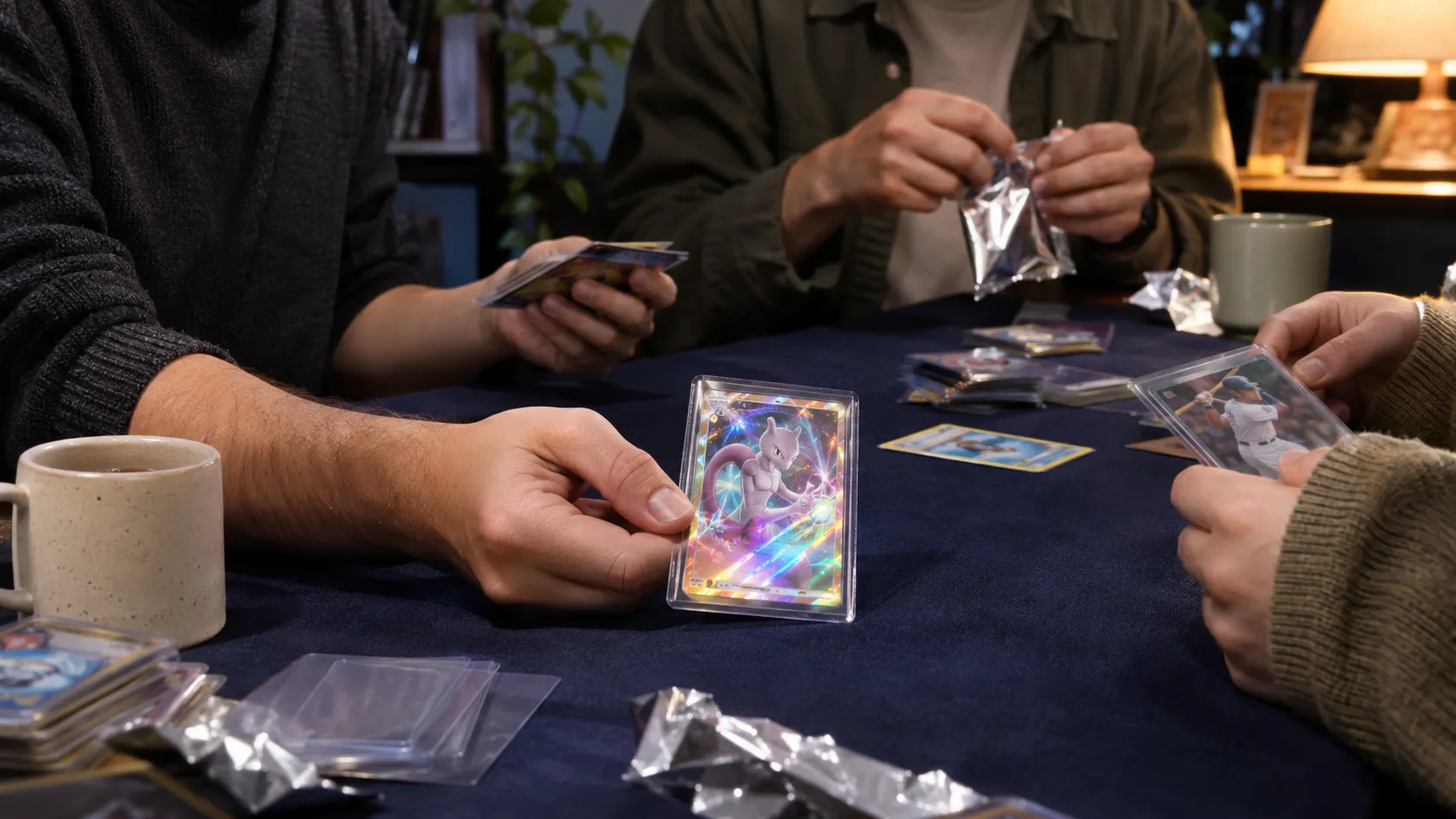
Knowing how much Pokémon* Rip cards are worth starts with identifying what you have. Some sell for a few cents, while sought-after, well-preserved cards can command thousands of dollars.
The tricky part is finding the exact version you own and checking what it's selling for today. Here's how to estimate your cards' value without getting misled by inflated asking prices.
What affects the value of a Pokémon* card?
Two cards featuring the same Pokémon* TCG game characters can have very different price tags. Even identical cards may sell for different amounts depending on their condition.
Several factors influence Pokémon* card values.
- Rarity and availability: Harder-to-find cards, limited releases, and certain promotional editions can attract higher prices.
- Set and edition: A first-edition vintage card may be worth considerably more than a later printing of the same character.
- Condition: Scratches, worn edges, and creases can reduce resale value.
- Collector demand: Popular characters, memorable artwork, and cards used in competitive play can attract buyers.
- Grading: A professionally graded card may command a premium, particularly at higher grades.
Age alone doesn't make a card valuable. A modern illustration rare with strong collector demand could sell for more than an older card that was widely printed.
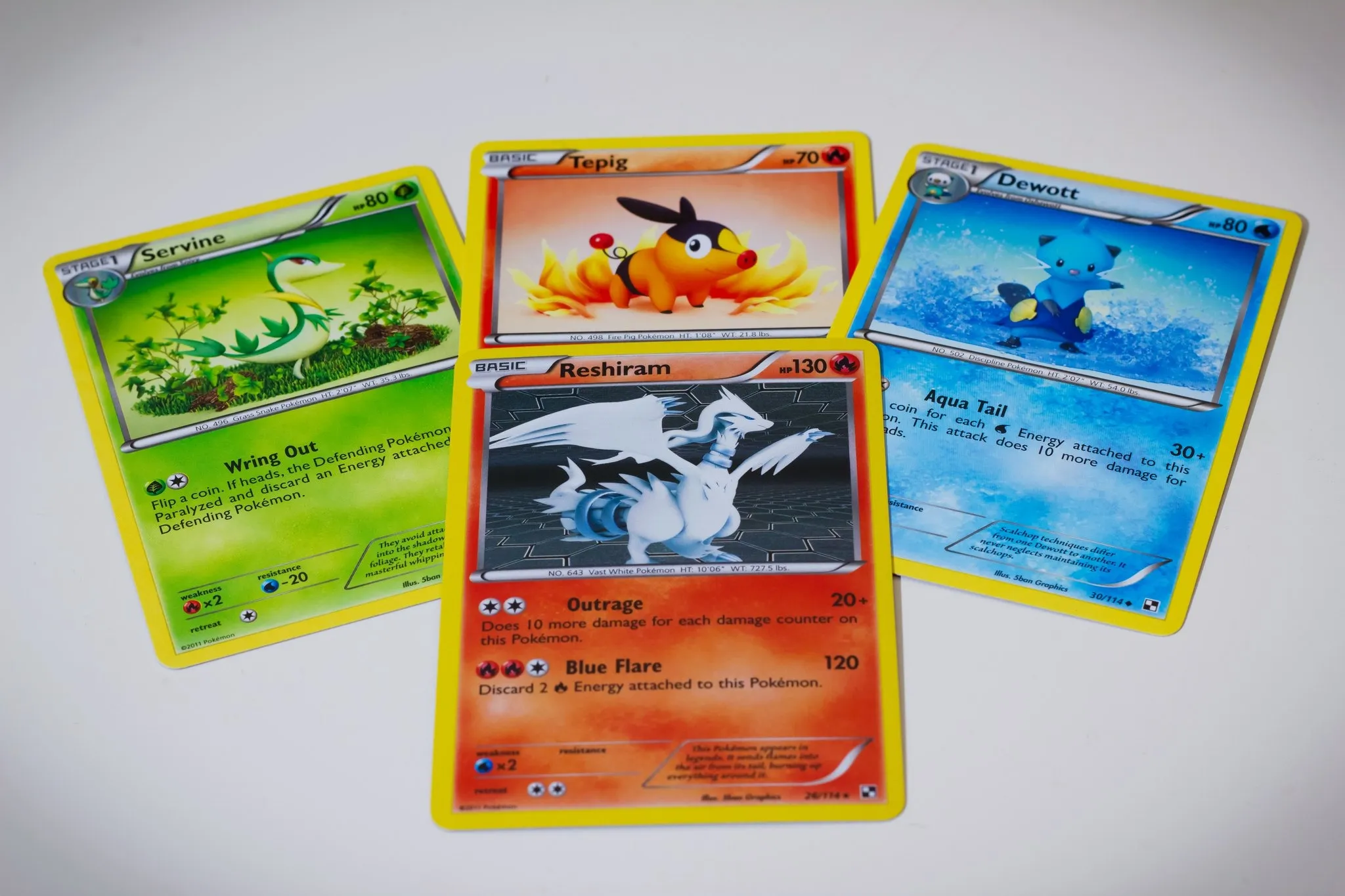
Source: Photos By Dlee
How do you identify the exact Pokémon* card you have?
Before searching for prices, you need to identify the exact card. A Charizard from one expansion isn't necessarily worth the same as one from another.
These details on your card can help.
- Card name: The character or Trainer name is the starting point.
- Set symbol or code: This identifies the expansion the card belongs to.
- Collector number: Usually printed near the bottom, this helps distinguish different versions.
- Variant: Whether it's holographic, reverse holographic, full-art, or another special version can affect value.
- Language and edition: English, Japanese, first-edition, and other printings may have different values.
You can use the official Pokémon* Trading Card Game database to match the card's name, expansion, and other identifying details.
Once you've found an exact match, you're ready to compare prices.
How do condition and grading affect Pokémon* card value?
A card that looks perfect in a binder might have tiny scratches or whitening along its edges. Those details can make a noticeable difference when selling.
Ungraded cards, often called 'raw' cards, are commonly described as Near Mint, Lightly Played, Moderately Played, Heavily Played, or Damaged.
Professional grading services like PSA examine the card's authenticity and condition, then assign a numerical grade. PSA uses a scale from 1 to 10, with PSA 10 representing Gem Mint condition.
A PSA 10 can sell for considerably more than the same card in PSA 7 condition. However, grading doesn't automatically make a card valuable, and even a pack-fresh card isn't guaranteed a perfect score.
Where can you check Pokémon* card values in the US?
If you want to know where and how to check Pokémon* card value in the US, several websites can help. A good Pokémon* card price checker should identify the exact version and show prices based on actual sales rather than asking prices.
Resource | What it's useful for |
eBay Sold Listings | Checking what buyers recently paid for comparable cards |
TCGplayer | Checking market prices and sales history for individual cards |
PSA Price Guide | Researching professionally graded card values |
PSA Auction Prices Realized | Comparing past auction results for graded collectibles |
TCGplayer's Market Price uses completed sales rather than seller asking prices. eBay's Product Research tool offers additional historical sales data, including accepted offers.
For a more reliable estimate, compare results from multiple sources instead of relying on a single price.
How do you use recent sold prices to value your Pokémon* cards?
You've probably seen listings asking hundreds of dollars for an ordinary-looking card. But an asking price doesn't mean anyone is paying it.
Recent completed sales offer a better starting point when learning how to value Pokémon* cards.
Here's an example. Suppose you find three recent sales of your exact card in comparable condition.
Recent sale | Sold price |
Sale 1 | $35 |
Sale 2 | $40 |
Sale 3 | $45 |
Average | $40 |
In this hypothetical example, $40 is a reasonable starting estimate before selling costs. It's not a guaranteed selling price.
It's worth making sure you're comparing the same edition, language, and condition. A PSA 10 sale shouldn't be used to price your ungraded copy. For cards with few recent sales, you may need to look further back, although older transactions might not reflect current demand.
How much could you receive after selling fees and shipping costs?
A card's estimated market value isn't necessarily what you'll take home after selling it. Depending on the marketplace, you may pay selling fees, transaction charges, shipping, insurance costs, or even taxes.
Imagine selling your card for $100.
Item | Amount |
Selling price | $100 |
Marketplace fees (illustrative) | -$12 |
Shipping and packaging | -$6 |
Amount received | $82 |
Your actual costs depend on the platform and shipping method. If you paid to have the card graded, that expense should factor into your overall return, too.
Taxes can further reduce what you take home. In the US, profits from selling collectible cards may be subject to federal and state income taxes, particularly on high-value sales. Generally, tax applies to the profit rather than the full selling price, while losses on personal collectibles aren't tax-deductible.
Before listing a card, it helps to estimate the amount you'll receive after expenses rather than focusing on the headline sale price.
How do you estimate the value of your Pokémon* card collection?
To work out how much your Pokémon* cards are worth, it helps to start by separating them by set and identifying any holographic, promotional, or otherwise potentially valuable cards.
A collection tracker or spreadsheet can help you record each card's name, number, condition, estimated value, and the date you checked its price. For a large collection, you can group lower-value cards together rather than researching every common card individually.
Adding up your individual estimates gives you an approximate collection value. Just remember that selling an entire collection as one lot may bring in less than selling the cards separately.
How can you check the value of a Pokémon* card revealed on OG.com?
Collectors have been opening Pokémon* card packs since the 1990s, but online card ripping has brought that experience to apps and websites, so you don't need to open physical packs yourself.
With OG.com Rips, you can open digital packs that reveal real, physical collectible cards. Before purchasing, each pack's Odds page displays the probabilities and value ranges for its possible pulls.
Once you've revealed a card, you can review its details and the buyback offer provided by OG.com's fulfillment partner, Phygitals.
You have two options:
- Sell. Accept the displayed buyback amount and receive the proceeds in your USD Wallet.
- Keep. Hold the card temporarily in My collection while deciding whether to sell or request physical delivery.
The buyback offer isn't necessarily the card's estimated market value or the price you paid for the pack. You can compare the revealed card with recent sales to get another perspective on its value.
You have one day for the welcome pack and three days for all other packs to request shipping or accept the cash offer. A countdown in My collection shows how much time remains. If you take no action, your card is automatically sold when the buyback window expires.
Shipping is available to eligible U.S. addresses and requires identity verification.
How to start ripping Pokémon cards online on OG.com
- Sign in or create an account. Open OG.com on the app or website and select Rips.
- Choose your Pokémon pack. Select Pokémon category and tier, then check its Odds page.
- Pay. Tap Rip for $X and complete payment using an available method.
- Reveal your card. Tap to select a pack, then swipe to rip. You can share your reveal with friends on social media.
- Choose Keep or Sell. If keeping, use the countdown in My collection to arrange shipping or sell before time runs out.
FAQs about Pokémon* card values
Can I check Pokémon* card values for free?
You can use free resources such as eBay sold listings, TCGplayer, and PSA's price guide to research comparable cards.
Are older Pokémon* cards always worth more?
No. Rarity, condition, and collector demand can make some modern cards more valuable than older ones.
Are Japanese Pokémon* cards worth more than English versions?
Prices depend on the specific card, its availability, condition, and demand for each language version.
Can common Pokémon* cards or Trainer cards have resale value?
Certain vintage commons, popular Trainer cards, and playable cards can attract buyers, even without a high rarity designation.
Are damaged Pokémon* cards still worth anything?
Rare or highly sought-after cards may retain resale value despite damage, although their condition can significantly reduce the price.
How reliable are Pokémon* card-scanning apps?
A Pokémon* card price checker can help identify cards and estimate values, but scanning errors and outdated sales data mean it's worth verifying the results.
Why do different websites show different values for the same card?
Websites may use different sales histories, condition assumptions, or pricing methods, which can produce different estimates.
Do I need to get my Pokémon* cards graded before checking their value?
No. You can research raw card prices using comparable sales before deciding whether professional grading is worthwhile.
How do I decide whether grading is worth the cost?
It helps to compare your card's likely graded value with its ungraded price, then consider grading fees, shipping costs, and the possibility of receiving a lower grade than expected.
Why might a store or platform offer less than a price guide estimate?
Stores and buyback providers may offer less than estimated retail value to account for resale costs, market uncertainty, and their own pricing policies.
Does the price of a pack tell you what its cards are worth?
No. Pack prices don't guarantee the value of the cards inside, even when higher-priced packs offer different possible pulls.
How often should I update my collection's value?
Checking every few months is useful for an actively collected set, while valuable cards may deserve more frequent updates when prices change.
Important information
OG.com Rips is offered by OGMUS. Subject to Terms and Conditions; 18+ only. OG.com Rips are not regulated by the CFTC. Images shown do not represent a typical result. OGMUS also provides access to third-party services, including CFTC-regulated products.
*NFL, NBA, MLB, and Pokémon are third-party brands; their owners are not parties to the sale of cards via OG.com Rips