What is OPS in baseball? On-base plus slugging explained
OPS has become the top indicator of measuring a player’s offensive performance in baseball. We discuss why its equation suits how the league has been using it.
Learn
By Sam Bloomquist
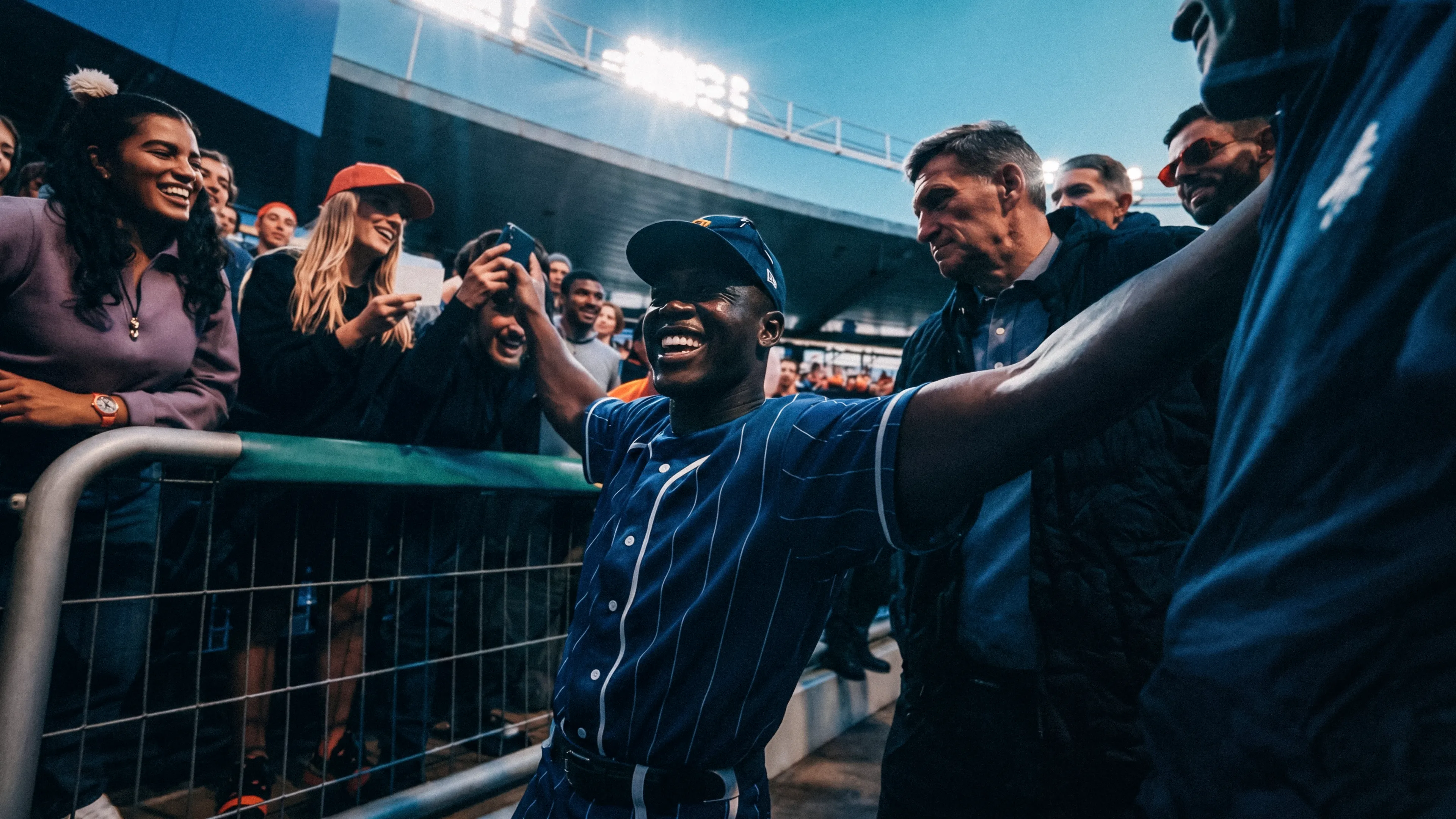
OPS has become the number one indicator of how well a baseball player performs offensively. Originally, teams relied on batting average, slugging percentage, and on-base percentage separately, and it was hard to tell who was providing enough offensive support.
Wrapping them all up together in OPS gives you one strong figure to rely on when you’re evaluating your players’ performances.
What does OPS stand for?
On-base plus slugging. It measures the overall offensive performance for a baseball player rather than focusing on just one facet of their game.
Other terms, like OBP, SLG, batting average, and RBIs, are all helpful when measuring a player’s efficiency, but they can be skewed toward the type of player they are.
The OPS formula: OBP plus SLG
OBP + SLG = OPS
Let’s say the batter’s on-base percentage was .350 and their slugging percentage was .400. That means their OPS would be .750. As a player compiles a better OPS, you’ll see their prices in the market change.
What is on-base percentage?
On-base percentage, simply put, is the percentage of plate appearances that a player ends up on base. This can happen from any form of a hit or from a walk. You can find it by taking the number of a player’s hits and walks and dividing it by their total number of plate appearances.
What is slugging percentage?
The definition of slugging percentage measures how often a player gets an extra-base hit, which includes doubles, triples, and home runs. These are the types of hits that can significantly boost a team’s offensive performance.
How to calculate OPS: a worked example
Two very different types of offensive baseball players can have the same OPS, which means they’ll be contributing to their offense equally despite getting there in different ways.
Player A:
.550 SLG, .200 OBP
Player B:
.375 SLG, .375 OBP
Both players shown above have a .750 OPS but do so in drastically different fashions. Player A has a .550 slugging percentage, which means when they hit the ball, it’s usually an extra-base hit. However, they’re only on base 20% of the time.
On the other hand, Player B is a little more well-rounded. A third of their hits are extra-base hits, and they reach base about a third of the time. Both stack up to the same offensive output, allowing us to bring two polar opposite players into the same context.
OPS allows you to measure a big swinger, someone who hits for contact, and a bunt-single hitter all on the same scale. This assists them in making free agency and trade decisions because you can balance all of the hitters equally instead of favoring a specific brand of baseball.
What counts as a good OPS?
- Below .650: A below-average score. Not contributing and likely struggling to stay in their team’s lineup.
- .650 – .750: Roughly league average. The league’s average has been .720 in recent seasons.
- .750 – .850: A good, everyday starter, not yet an All-Star
- .850 – .950: One of the top player in the league, likely an All-Star at their position.
- 1.000+: Top-five player, potentially an MVP.
OPS vs. OBP: Which tells you more?
OBP is a highly regarded statistic in baseball because it measures how often a player gets on base. If a player gets out, then their at-bat is over; there’s no more hope for offense. You need guys who can get on base to survive.
However, OPS gives these players context. Are they hitting the ball far? Are they working a lot of walks? Are they truly adding value to your offense, or are they just getting on base and not doing anything with it?
Who leads in OPS today and all time?
The leader in OPS for the 2026 season was Yordan Alvarez with a 1.033, and second place was Pete Crow-Armstrong with .942. Alvarez won AL MVP, and Crow-Armstrong won NL MVP.
The top five players in OPS all-time are as follows:
- Babe Ruth - 1.164
- Ted Williams - 1.116
- Lou Gehrig - 1.079
- Oscar Charleston - 1.060
- Barry Bonds - 1.051
All of the players in this list are in the National Baseball Hall of Fame, aside from Bonds, who is banned for steroid use.
How to trade prediction markets on OG.com
With OG.com, you can trade event contracts on real-world outcomes across different market categories.
- Create an account: Open an account and complete sign-up, including identity verification. You can use our web or mobile platforms.
- Browse markets: Explore markets across economics, culture, politics, sports, and other real-world events.
- Review and trade: Compare the market price with your own view. Check the rules, fees, and settlement details before opening a position. Set a limit order for risk management.
- Monitor your position: After trading, your contract appears in your open positions, where you can track price movement as new information comes in.
Start predicting: https://og.com/auth
FAQs about OPS in baseball meaning
What does OPS stand for in baseball?
On-base Plus Slugging. A combination of a player’s On-base percentage and their Slugging percentage.
What is the OPS formula?
Add together their on-base percentage and their slugging percentage.
What is a good OPS in baseball?
A solid, everyday hitter will have at least a .750 OPS.
What is the difference between OPS and OBP, and which is more useful?
OPS adds the element of slugging percentage, which gives a better rubric for their offensive efficiency.
What is slugging percentage?
How often a player hits an extra-base hit (a double, triple, or home run).
What do the common baseball stat abbreviations mean (OPS, OBP, SLG, AVG, RBI)?
OPS stands for On-Base Plus Slugging; OBP stands for On-Base Percentage; SLG stands for Slugging Percentage; AVG stands for Batting Average; RBI stands for Runs Batted In.
Important Information: Prediction is an event contract that is a derivatives product offered by North American Derivatives Exchange, Inc. (NADEX), a CFTC-regulated exchange, which does business under the brand OG.com Prediction Markets (OG) Crypto.com | Derivatives North America and uses a CFTC-regulated exchange that uses OG.com technology.
Trading on OG.com involves risk and may not be appropriate for all. By trading you risk losing your cost to enter any transaction, including fees. You should carefully consider whether trading on OG.com is appropriate for you in light of your investment experience and financial resources. Any trading decisions you make are solely your responsibility and at your own risk.