Stars vs Avalanche prediction: A rematch with little recovery time
Prediction markets currently favor the Avalanche at 78%, while the Stars are priced at 61%. Back-to-back meetings give both teams a chance to adjust quickly, with goaltending and recovery adding uncertainty to the second game.
Hockey
By Ekaterina Drozdovica
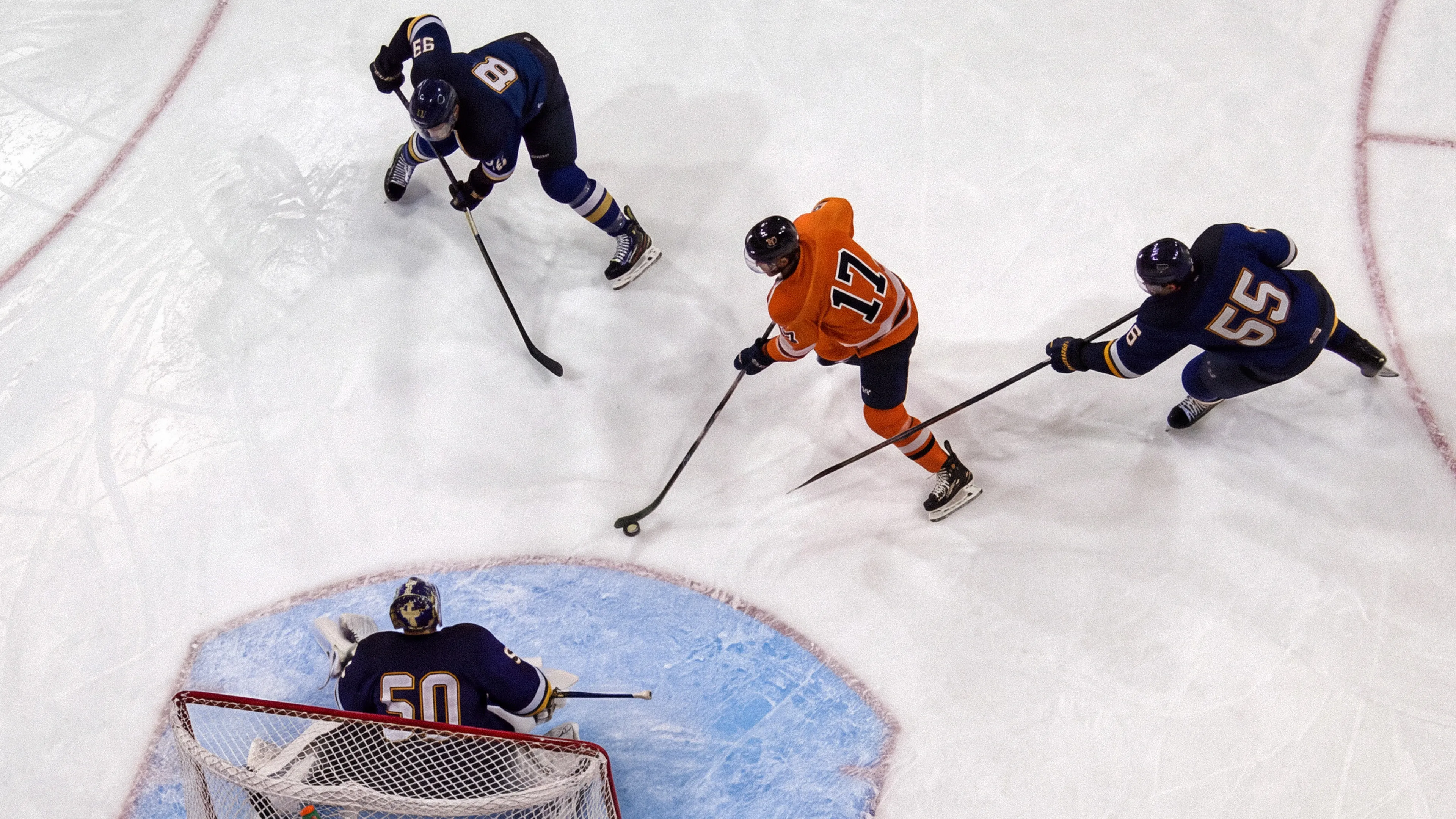
The Dallas Stars and Colorado Avalanche won’t have long to dwell on their first meeting of the season. They play in Dallas on October 13, then meet again in Denver the following evening.
That gives the Stars vs Avalanche prediction an extra complication. By the time the second game begins, both teams will have fresh evidence of what works against the other, but limited time to recover or make changes. The first result will matter. So will how much it takes out of the players.
What is Stars vs Avalanche prediction?
OG.com’s October 14 market puts the Avalanche ahead at 78%, compared with 61% for the Stars.
These are separate displayed market-implied prices, not a probability split that adds to 100%. They should be read as the prices attached to the listed outcomes, rather than a single statistical forecast of the game.
The Avalanche carry the stronger market position, but the October 13 meeting could change that picture quickly. Starting-goalie decisions, injuries and the workload from the first game are all potential reasons for traders to reassess the matchup market.
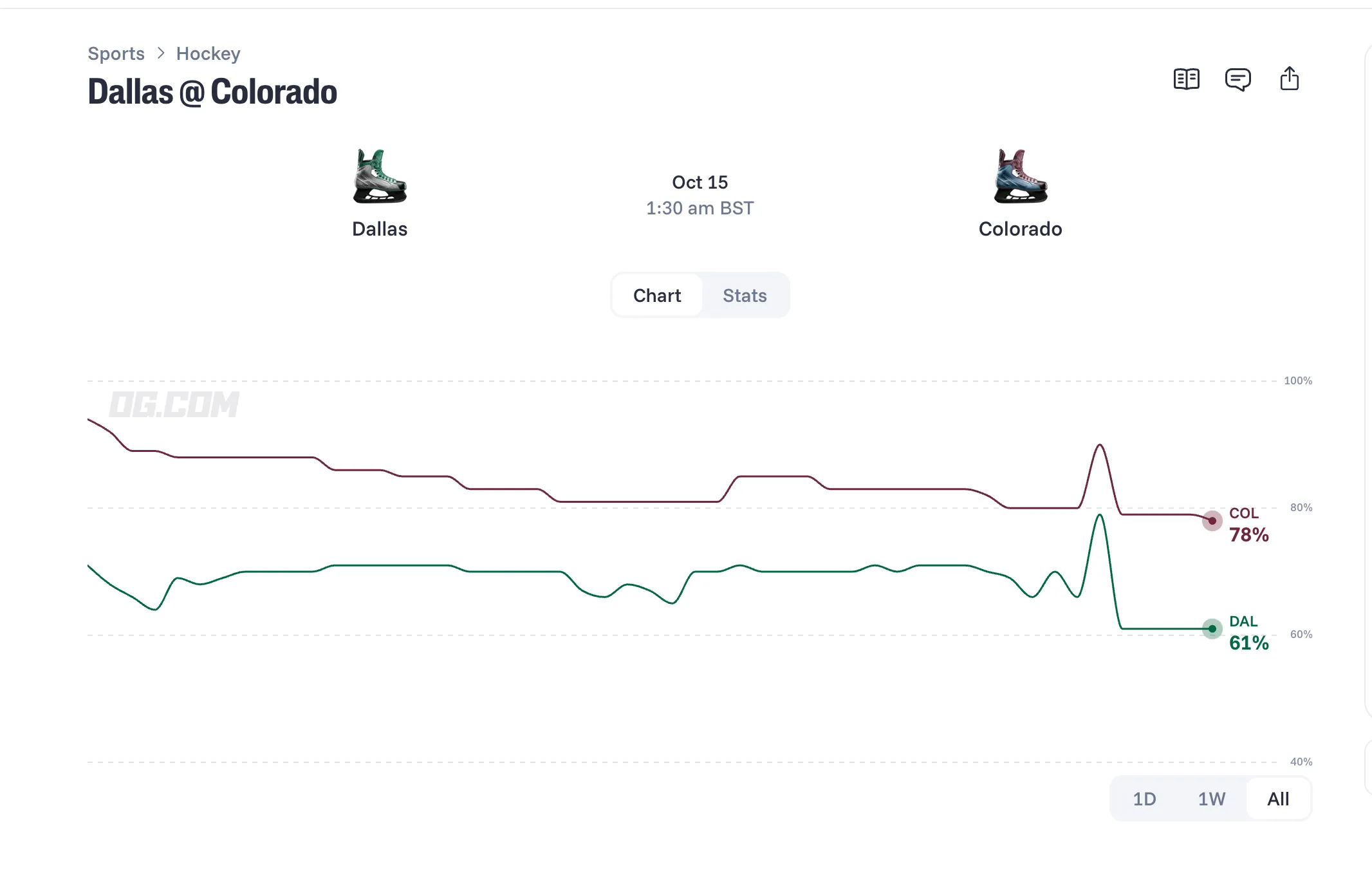
Market data as of October 6. For the latest market probabilities, check the OG.com platform.
When is Stars vs Avalanche?
The teams play on consecutive nights, switching host cities between games. The probabilities above apply to the October 14 meeting.
Date | Matchup | Start time |
|---|---|---|
October 13, 2026 | Avalanche at Stars | 8:30 p.m. ET / 7:30 p.m. CT |
October 14, 2026 | Stars at Avalanche | 8:30 p.m. ET / 6:30 p.m. MT |
Both are regular-season games. The current schedule lists ESPN for the first meeting and TNT and truTV for the second.
Stars vs Avalanche recent scores and head-to-head results
The Stars have just produced a result that could help settle their early-season nerves. The Avalanche, meanwhile, have made scoring look unusually straightforward.
Date | Game | Final score |
|---|---|---|
April 4, 2026 | Avalanche at Stars | Avalanche won 2–0 |
September 30, 2026 | Kings at Avalanche | Avalanche won 8–4 |
October 2, 2026 | Blues at Stars | Blues won 4–0 |
October 3, 2026 | Stars at Predators | Predators won 2–1 |
October 3, 2026 | Blues at Avalanche | Avalanche won 6–1 |
October 5, 2026 | Sharks at Stars | Stars won 5–0 |
The latest Stars win came with an important qualification: the Sharks were without Macklin Celebrini, and Jake Oettinger faced only 13 shots. That’s encouraging defensive control, but it leaves the question of how well the approach will hold up against a different attack.
Where do the Stars and Avalanche stand this season?
Through October 5, the Stars were 1–2–0 and the Avalanche were 2–0–0. NHL.com There are several games before this matchup, so neither record should be treated as the final picture heading into October 14.
The immediate stakes are about establishing consistency. The Stars need to show that their latest performance can become a repeatable standard. The Avalanche need to keep generating good opportunities when opponents adjust and make space harder to find.
Stars vs Avalanche team news, injuries and projected lineups
With more than a week until the second meeting, recent combinations are a starting point. Injuries and the first game’s workload could change both lineups.
Stars: Duchene’s absence puts the focus on depth
Matt Duchene moved to long-term injured reserve with a lower-body injury and was expected to remain out until at least late October. His absence reduces the options available when the coaching staff wants to spread offensive responsibility.
The October 5 combinations included Robertson–Hintz–Benn and Steel–Johnston–Rantanen, with Heiskanen alongside Lindell on defense. Those units offer a recent reference, not a confirmed lineup for October 14.
Avalanche: Forward availability could change the rotation
The October 3 injury report listed Logan O’Connor and Zachary L’Heureux as day to day with lower-body injuries. The Avalanche used 11 forwards and seven defensemen for that game.
Recent combinations included Artturi Lehkonen with Nathan MacKinnon and Martin Necas, plus Gabriel Landeskog with Brock Nelson and Nazem Kadri. Whether the team restores a conventional 12-forward lineup could affect how it distributes minutes across consecutive nights.
Neither team’s October 14 starting goaltender is confirmed. The Avalanche’s recent options were Mackenzie Blackwood and Scott Wedgewood; the Stars listed Oettinger and Casey DeSmith.
What could decide Stars vs Avalanche?
The first meeting will provide a useful tactical guide, but the second could ask a different physical question. Fresh legs and sensible adjustments may matter as much as the opening night’s result.
Can the Stars make the Avalanche work for possession?
The Stars’ best route is to spend enough time attacking that the Avalanche can’t dictate the pace. That means holding onto the puck through contact, recovering loose pucks and giving their defensemen safe passing options.
Simply backing off would carry its own risk. If the Avalanche can enter the zone comfortably and move the puck before pressure arrives, the Stars could spend long stretches chasing. Their defensive game needs to include an effective way of getting out.
How will the first game affect the second?
A close October 13 contest could bring heavy minutes for the leading forwards and defensemen. Overtime would add another layer, while an uneven score might allow one coach to spread the workload more widely.
That makes goaltending particularly interesting. A strong first-game performance doesn’t automatically mean the same goalie starts again. The second matchup could feature a different pairing, and neither team’s market position should be assessed as though that choice is already settled.
Can the Avalanche force rushed decisions?
For the Avalanche, the opportunity is to make the Stars move the puck under pressure before their support arrives. A hurried clearance can create another attacking possession; a turnover near the blue line can create something more dangerous.
The Stars can counter by keeping their passing options close enough to use. If they make the Avalanche retrieve pucks and defend sustained shifts, they could reduce both the home team’s attacking time and its energy for the next rush.
FAQs about Stars vs Avalanche
When do the Stars and Avalanche play?
They meet on October 13 and October 14, with both games starting at 8:30 p.m. ET. The first is in Dallas; the second is in Denver.
What was the score in their last meeting?
The Avalanche won 2–0 on April 4. Their October 13 game will provide a much fresher comparison before the following night’s rematch.
Why could the starting goalies change the prediction?
Consecutive games can lead coaches to share the workload. A different starter, combined with tired defenders or changes to the lineup, can alter the conditions behind the earlier market price.
Can I trade Stars vs Avalanche event contracts?
OG.com lists a market for the October 14 matchup. The date matters here: these probabilities concern the game in Denver, not the previous evening’s meeting.
Important Information: Prediction is an event contract that is a derivatives product offered by North American Derivatives Exchange, Inc. (NADEX), a CFTC-regulated exchange, which does business under the brand OG.com Prediction Markets (OG) Crypto.com | Derivatives North America and uses a CFTC-regulated exchange that uses OG.com technology.
Trading on OG.com involves risk and may not be appropriate for all. By trading you risk losing your cost to enter any transaction, including fees. You should carefully consider whether trading on OG.com is appropriate for you in light of your investment experience and financial resources. Any trading decisions you make are solely your responsibility and at your own risk.