How to trade tech and AI prediction markets
Tech news can move quickly, from earnings reactions and acquisition rumors about initial public offering (IPO) plans and AI-company milestones.
Tech
By Barbara Pazur

A tech prediction market turns those stories into a precise contract question, such as whether a defined event will happen or how a specified market measure will react under the contract rules.
This guide explains how tech and AI prediction markets work, what can move prices, why time horizons change the trade and what to check before opening a position.
This article is for informational purposes only and should not be construed as financial or investment advice. Past performance does not guarantee future results.
What are tech prediction markets?
Tech prediction markets are event markets tied to measurable outcomes involving technology companies, AI, corporate transactions, public listings, earnings reactions and other verifiable developments.
How do tech prediction markets work?
A tech event contract needs a defined event, possible outcomes, a deadline or observation window and a settlement rule.
Let’s take an IPO prediction market as an example, where the contract asks if Company A will meet a stated IPO condition by December 31. A contract for this event is structures around a “Yes” or “No” scenario.
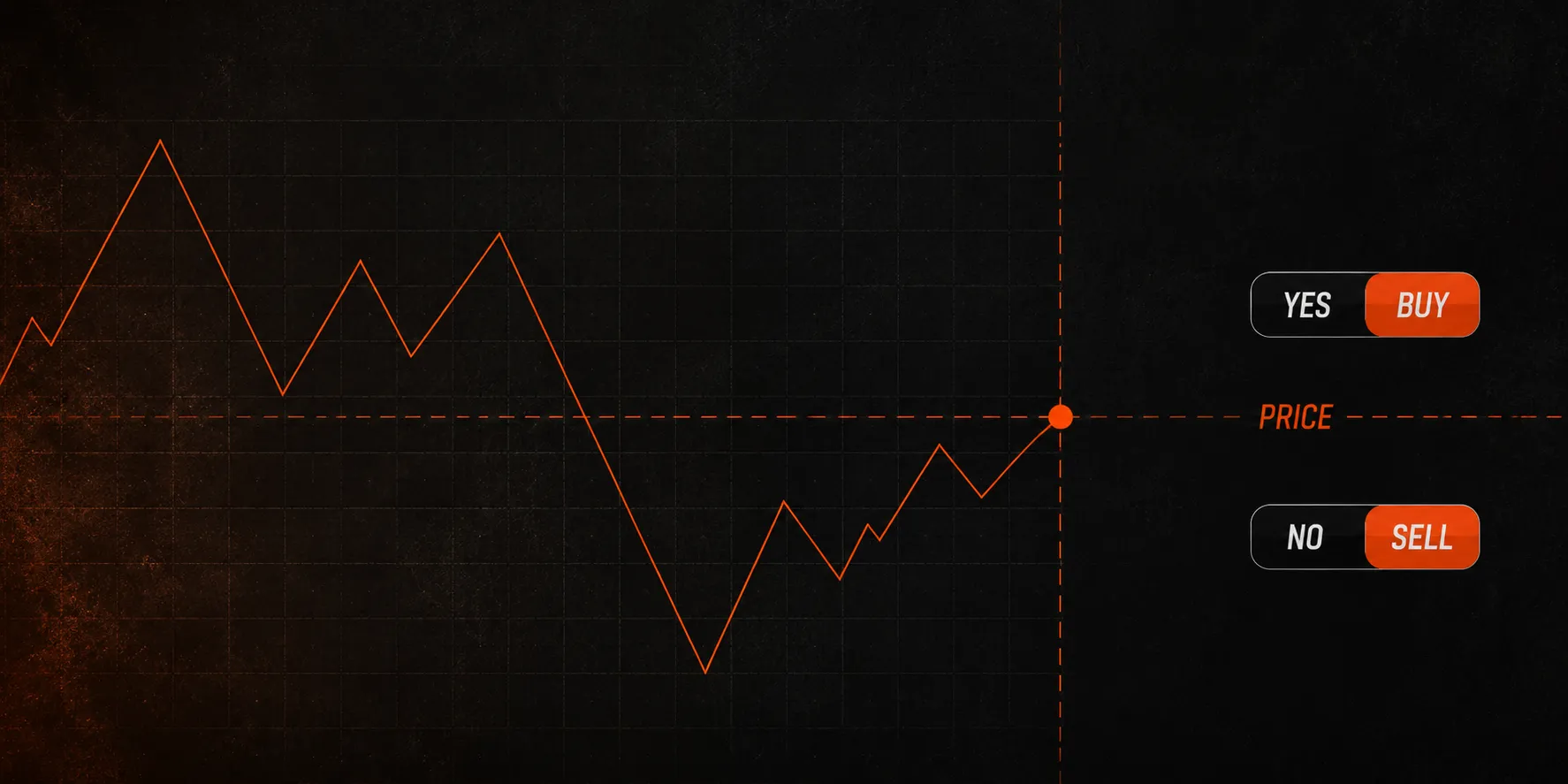
Traders compare the market price with their own expectations. They may change their positions as new information emerges about the company’s plans, funding needs, market conditions or public announcements.
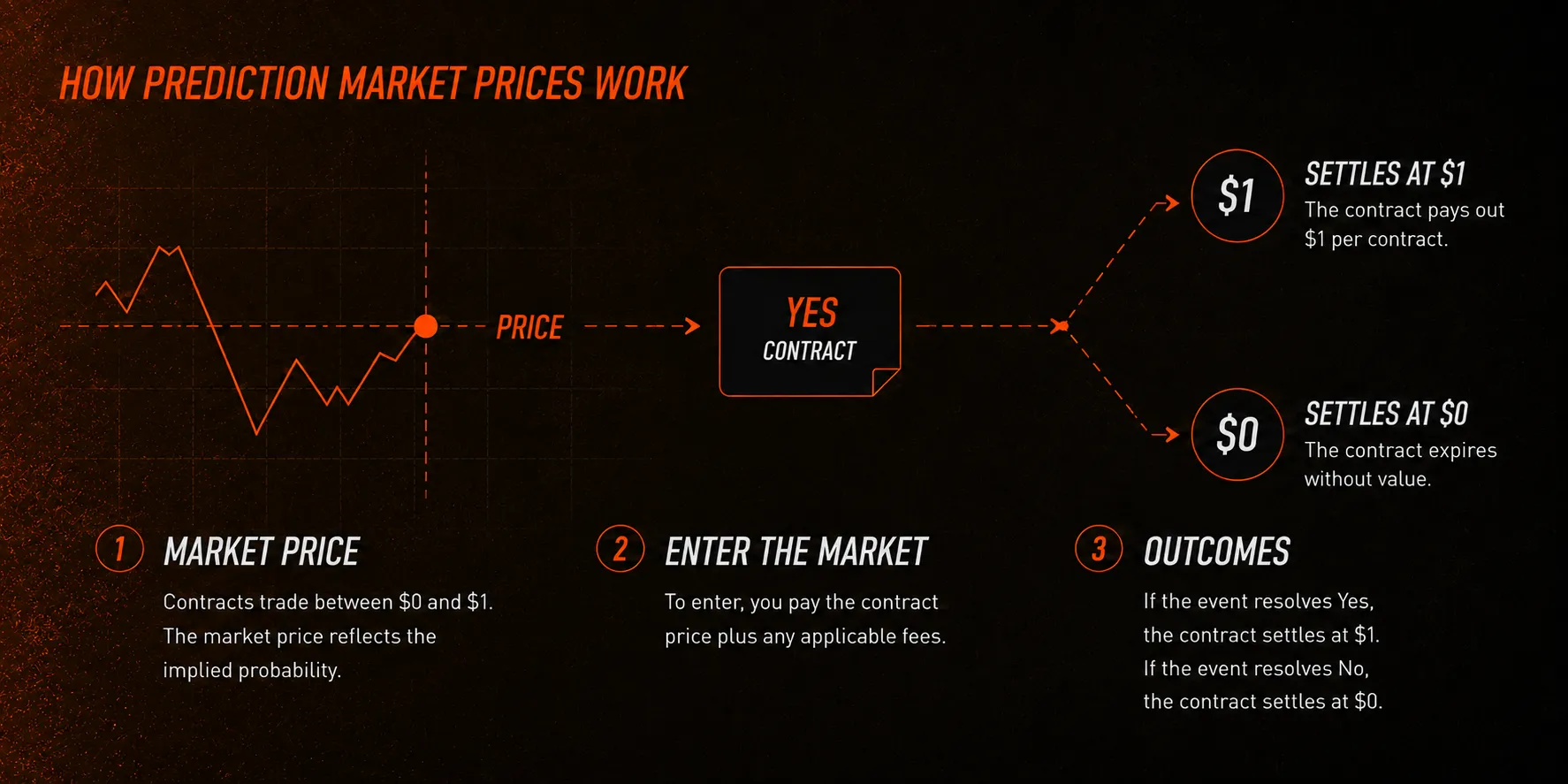
A “Yes” contract trading at 44% costs $0.44. It settles at $1 if the outcome happens and $0 if it does not. Always check the settlement rules and key dates before trading.
What types of tech prediction markets can you trade?
Tech and AI prediction markets can take several forms when the outcome is measurable and the settlement criteria are clear. Available markets can change over time, but examples can include:
- Earnings-reaction markets classify how a company’s share price performs during a defined period after earnings.
- IPO timing markets ask whether a company reaches a stated IPO milestone by a specified date.
- First-to-IPO markets compare two or more companies based on which one satisfies the contract’s IPO condition first.
- Company IPO markets offer multiple company outcomes tied to a public-listing milestone during a given period.
- Acquisition markets ask whether a defined acquisition occurs within the contract window.
- Other technology events cover measurable AI, product, corporate or technology milestones with verifiable settlement criteria.
These formats only work when the contract defines the event, deadline, settlement source and outcome clearly enough to resolve.
How do short-term earnings-reaction markets work?
Earnings-reaction markets aren’t the same as predicting whether a company beats estimates. The contract may focus on how the share price reacts during a short period after the earnings event.
A short-window contract could classify the reaction in three ways:
- A negative move beyond a stated threshold.
- A result inside a defined range.
- A positive move above a stated threshold.
A prediction markets trader is encouraged to read the exact price measurement, start time, end time, percentage bands, reference data source and observation window.
A company can report stronger-than-expected results and still see a negative share-price reaction if the market had already priced in an even better outcome. Earnings-reaction markets show how tech prediction markets often price the gap between expectations and the reported result.
How do IPO prediction markets work?
An IPO prediction market can ask one of several questions. One contract may focus on whether Company A reaches a stated IPO milestone by a deadline. Another may compare Company A with Company B IPO plans. A larger multi-outcome market may ask which company reaches the required public-listing step during a given year.
Why does time horizon matter in tech prediction markets?
A 10-minute earnings-reaction market and a multi-year IPO market ask very different questions. In the first, the result can depend on immediate share-price behavior after earnings.
In the second, the company has much longer to change plans, raise capital, wait for better market conditions or hit delays.
Example format | Information traders may watch | Main challenge | |
Minutes | Post-earnings price reaction | Earnings, guidance, expectations, immediate price action | Very fast repricing |
Months | Acquisition or IPO deadline | Filings, announcements, financing, regulation | Event timing |
Longer term | Which company reaches a milestone first | Strategy, funding, corporate plans, market conditions | More uncertainty can develop |
A short earnings market leaves little time for information to change, but prices can move quickly. A longer deadline gives the story more time to develop, which can create more uncertainty, not less. Plans can shift, regulation can slow a deal, financing can change and market conditions can look different by the deadline.
What affects tech prediction market prices?
The useful information depends on the contract. A stronger tech sector may help sentiment, but an event contract still resolves on its own event, deadline and rules.
- Earnings-reaction markets can move around company results, revenue and profit expectations, guidance, analyst expectations, previous positioning and the immediate share-price reaction.
- IPO predictions can respond to company statements, regulatory filings, fundraising activity, restructuring, leadership comments, market conditions for new listings and credible reporting. Those signals can change expectations, but they don’t settle the contract unless they satisfy the rule.
- Acquisition markets can react to company announcements, filings, financing, antitrust review, shareholder approvals where applicable and closing conditions named in the transaction.
- For an AI prediction market, useful information may include product releases, company announcements, benchmarks, regulatory developments or independently verifiable milestones. A rumor can move the price, but it isn’t settlement evidence.
Why do traders use tech prediction markets?
Traders use tech predictions markets to take a view on tech-related events, and earn money if this view materializes.
Tech predictions often start as views about companies, IPOs, earnings, AI or corporate events. Tech prediction markets turn those views into tradable contracts.
Tech prediction markets vs trading tech stocks
The same company can appear in both a stock portfolio and an event contract, but the questions are different. A stock position follows company equity value, while a tech prediction market settles on a defined event outcome.
Tech prediction market | Tech stock | Key difference | |
Exposure | Defined event outcome | Company equity value | Different underlying thesis |
Time | Contract deadline or observation window | No fixed event deadline | Timing works differently |
Result | Settles according to contract rules | Value changes with share price | Different payoff structure |
Main question | Will this event occur? | What will the company be worth? | Different decision |
An investor could like a technology company over the long term and still think a specific IPO, acquisition or earnings-reaction contract is unlikely to settle at “Yes”.
What are the risks of tech prediction markets?
If the defined tech outcome doesn’t happen under the contract rules, the trade can result in a loss, including your entry cost and fees.
Prices can move quickly around earnings, announcements, rumors, regulatory updates or credible reporting. Some markets may also have lower liquidity, which can affect the price a trader can enter or exit.
Short-window earnings contracts can turn on small differences in the observation period, reference price or percentage band. IPO and company-event markets have a different risk because companies can delay plans, change strategy, raise private capital, face regulatory obstacles or meet different market conditions before the deadline.
Terminology can change the outcome too. An IPO may be “coming” in the way people talk about it, but the contract still needs the required milestone to happen.
FAQs about tech and AI prediction markets
How do tech prediction markets work?
Tech prediction markets use event contracts tied to measurable technology, company, AI, IPO, acquisition or earnings outcomes. The contract settles according to its stated rules.
What are AI prediction markets?
AI prediction markets are event markets tied to measurable AI-related outcomes, such as company milestones, product releases, corporate events or other verifiable developments.
How do IPO prediction markets work?
IPO prediction markets ask whether a company reaches a defined IPO milestone by a specified deadline, or which company reaches that milestone first.
How can prediction markets track an IPO date?
A contract can track an IPO date by naming the milestone that counts, such as a filing, pricing or first day of public trading, and setting a deadline.
How do earnings-reaction prediction markets work?
Earnings-reaction markets track how a company’s share price moves during a defined window after an earnings event. The result depends on the price measurement written into the rules.
What affects tech prediction market prices?
Company announcements, earnings, guidance, filings, credible reporting, funding activity, regulatory updates, acquisitions, product releases and market conditions can affect tech prediction market prices.
How are acquisition and company-event prediction markets settled?
They settle according to the contract’s definition, deadline and settlement source. A rumor or proposed deal may affect price without being enough to resolve the contract.
Important information: Prediction is an event contract that is a derivatives product offered by North American Derivatives Exchange, Inc. (NADEX), a CFTC-regulated exchange, which does business under the brand OG.com Prediction Markets (OG). Crypto.com | Derivatives North America uses a CFTC-regulated exchange that uses OG.com technology.
Trading on OG.com involves risk and may not be appropriate for all. By trading you risk losing your cost to enter any transaction, including fees. You should carefully consider whether trading on OG.com is appropriate for you in light of your investment experience and financial resources. Any trading decisions you make are solely your responsibility and at your own risk.