Which baseball cards are worth money?
A familiar player’s name can make a card worth keeping. Finding out what someone might pay for it takes a closer look.
Rips
By Claire Williamson
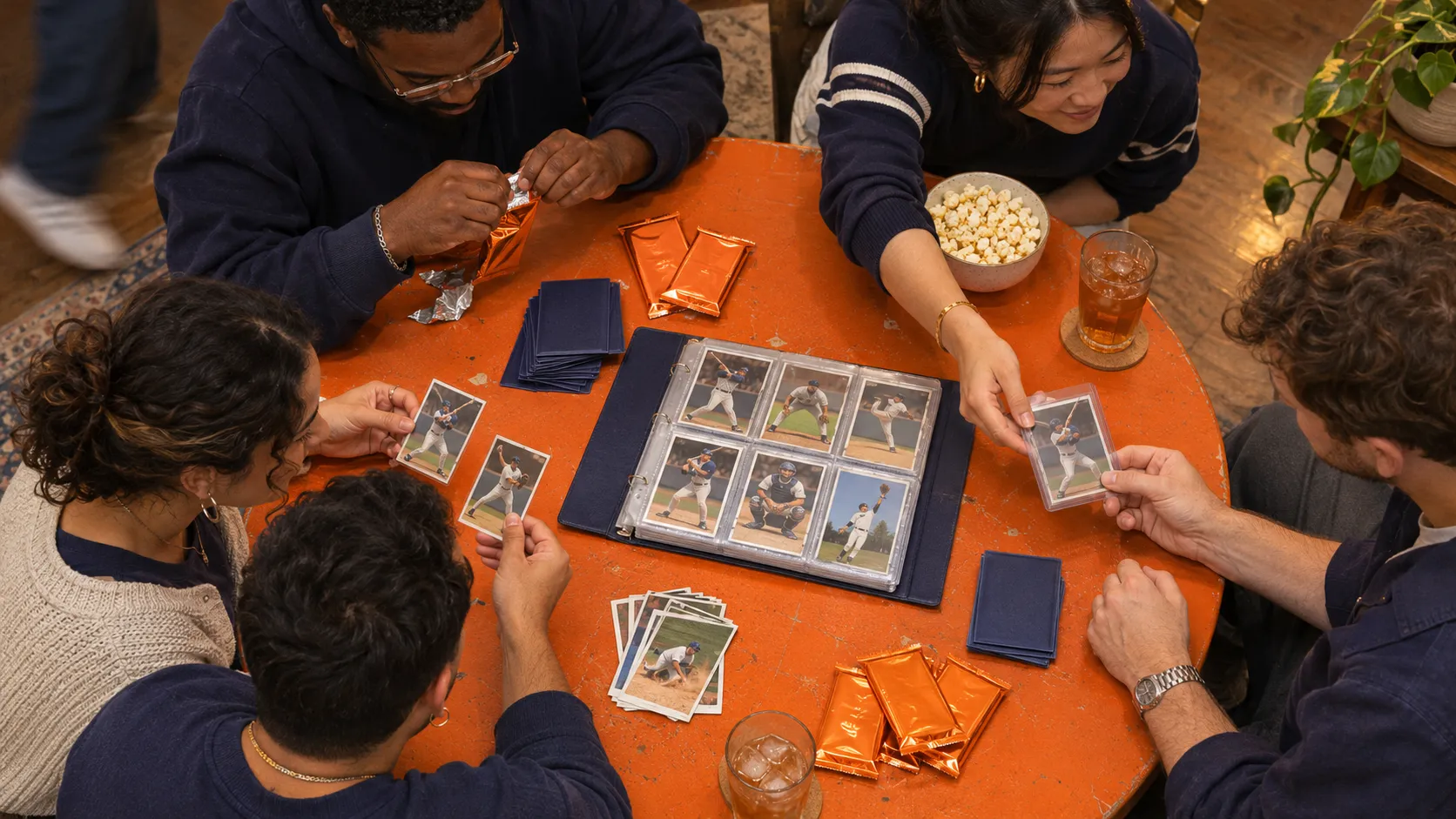
Some baseball cards worth money are vintage collectibles with decades of history. Others are modern rookie autographs, scarce parallels or recognized printing errors. Even a widely available card can attract interest in exceptional condition, while an old card of a famous player may be less valuable than you expect.
The most useful starting point is the exact card you own. Identify its release and version, assess its condition, then compare recent sales of closely matching copies. Here’s how to work through those steps without mistaking a headline auction result for your card’s price.
Research checked November 20, 2026. Historical sales below illustrate specific transactions, rather than current valuations.
What makes a baseball card valuable?
Baseball card values reflect the relationship between available supply and collector demand. The player matters, but so do the release, printing and condition of the individual copy.
Factor | Why it matters |
Player demand | Collectors may seek particular stars, prospects or personal favorites |
Exact release | Different cards of the same player can have different appeals |
Scarcity | Limited versions and scarce surviving copies can attract interest |
Condition | Damage, wear and printing defects affect how copies compare |
Authenticity | Buyers need confidence that the card and any signature are genuine |
Recent sales | Comparable transactions show what buyers have actually paid |
These factors work together. A scarce card doesn’t automatically have a large audience, and a popular player can appear on cards produced in substantial quantities.
Personal appeal is separate from resale value, too. A card can be an important part of your collection without commanding a high price.
Valuable baseball cards: Notable examples and documented sales
Sales of the most valuable baseball cards show how far exceptional examples can stand apart from ordinary copies. They’re useful context, but they aren’t price guides for every card of the same player.
Vintage icons and scarce early releases
One documented example is the 1952 Topps Mickey Mantle #311, graded Mint+ 9.5 by Sportscard Guaranty Corporation, commonly called SGC. Heritage Auctions sold that copy for $12.6 million in August 2022. Its exceptional condition and documented ownership history were central to the auction’s presentation.
That result belongs to that particular copy. A lower-grade example, a damaged card and a later reprint require separate comparisons.
The year also deserves attention: Mantle’s recognized rookie card is his 1951 Bowman #253, despite the prominence of the 1952 Topps issue. Confusing the two changes what you’re researching.
Rookie cards, prospect cards and modern collectibles
Modern cards can attract substantial interest when a sought-after player appears on a scarce early release.
In August 2020, a 2009 Bowman Chrome Draft Mike Trout Superfractor autograph, numbered one-of-one and graded Mint 9 by Beckett Grading Services, sold through Goldin Auctions for $3.936 million, including the buyer’s premium. The autograph received a separate grade of 10.
That combination is specific: Player, early prospect release, signature, one-of-one parallel and condition. It doesn’t establish the value of a standard Trout card or another Bowman printing.
Documented example | Reported sale | What the example illustrates |
1952 Topps Mickey Mantle #311, SGC 9.5 | $12.6 million, August 2022 | Exceptional condition and provenance can distinguish a vintage copy |
2009 Bowman Chrome Draft Mike Trout Superfractor autograph, Beckett 9 | $3.936 million, August 2020 | Modern scarcity and a signature can combine with strong player demand |
These are historical reported totals for the specified cards, not estimates of what similar cards would sell for today.
How can you identify the exact baseball card you own?
Learning how to value baseball cards starts with identification. Searching only a player’s name usually returns too many unrelated cards to support a useful comparison.
Examine both sides and record:
- Player and card number. The card number identifies its place within the release.
- Manufacturer, brand and year. Distinguish products such as Topps, Topps Chrome and Bowman Chrome.
- Subset or insert name. Some cards belong to a named group within the product.
- Parallel or variation. Note different colors, finishes, photographs or stamps.
- Autograph and memorabilia details. Read the certification wording.
- Grading details, if applicable. Record the company, grade and certification number.
The copyright date is a clue rather than a complete identification. Compare the card with the manufacturer’s official checklist, meaning its published list of cards and versions in that release.
For an unfamiliar parallel, match the photograph and finish as well as the number. Similar-looking cards can belong to different products.
Are rookie cards and 1st Bowman cards always valuable?
No. An early-career designation helps identify a collectible, but it doesn’t establish its price.
A 1st Bowman prospect card usually precedes a player’s official Major League Baseball (MLB*) rookie card. Each represents a different career stage, and both can appear in multiple versions.
Player demand, supply and condition still matter. A widely available rookie card can sell for a modest amount, while a scarce autograph parallel of the same player attracts a different audience.
Check the full version before comparing sales. A paper prospect card, Chrome card and numbered autograph shouldn’t be treated as equivalent.
How do autographs, serial numbers and variations affect value?
These features can distinguish one card from another, but each needs to be identified accurately.
Autographs: Look for authentication wording and establish whether the signature is genuine ink or a printed reproduction, also called a facsimile. A printed signature is part of the design, rather than an individually signed autograph.
Serial numbers: A stamp such as 08/25 identifies card eight in a stated run of 25 for that specific version. It doesn’t mean only 25 cards of the player exist.
Variations: A different photograph, finish or design can identify a separate printing. Confirm it against the release information rather than assuming every visual difference is scarce.
Reproductions can be particularly confusing. For example, Topps Through the Years inserts reproduce images of earlier cards; an autograph or patch visible within that reproduced image isn’t necessarily a physical signature or memorabilia piece on the insert itself.
Are baseball cards from the 1980s and 1990s worth money?
Some are. Many late-1980s and early-1990s releases were produced in large quantities, a period collectors often call the “junk wax” era. That supply helps explain why age alone doesn’t make the cards expensive.
There are baseball cards from the ‘90s worth money, but the details matter:
Card | What deserves attention |
1990 Topps Frank Thomas #414, No Name on Front | A recognized error version, distinct from the standard card with his name present |
1991 Topps Desert Shield Chipper Jones #333 | A separate edition from the regular Topps issue |
1993 SP Derek Jeter #279, Foil | A condition-sensitive rookie card whose surface and edges deserve close inspection |
PSA, short for Professional Sports Authenticator, specifically notes the Jeter card’s dark edges and foil surface as condition challenges, including wear that can be present straight from a pack. An unopened pack doesn’t promise a flawless card.
How much do condition and grading affect baseball card prices?
Condition can create substantial differences between copies of the same card. Grading provides a professional assessment, but it doesn’t set a guaranteed selling price.
PSA’s standards consider features including corners, centering, surface defects and original gloss. Its highest numerical grade, Gem Mint 10, describes a virtually perfect card within its stated tolerances.
When comparing graded cards, match the grading company as well as the number. Also check whether a label grades the card, the autograph or both.
For a card already in a graded holder, use the company’s certification lookup and compare available images and label details. A valid number alone isn’t conclusive: PSA warns that counterfeit holders can copy genuine certification numbers.
Before paying for grading, compare the likely costs with sales at several plausible grades. Submission fees, shipping and insurance can outweigh any price difference, particularly if the card receives a lower grade than expected.
How can you find reliable recent sales for your card?
A useful comparison needs to match the card closely and be recent enough to reflect current demand.
Start with a detailed search, such as:
1993 SP Derek Jeter #279 Foil PSA 8
Then check the underlying listings:
- Match the set, version, language and condition or grade.
- Separate individual cards from lots and bundles.
- Record the sale date and currency.
- Check shipping charges and auction buyer’s premiums.
- Confirm the accepted price where a Best Offer was involved.
eBay Product Research provides up to three years of sales data and shows actual accepted Best Offer prices. Its ordinary completed-listing results cover a shorter period, so the research tool can help when comparable sales are infrequent.
Auction archives and grading-company sales records provide other reference points. Look at several relevant transactions where possible, and avoid mixing unrelated versions into an average.
If there are no close matches, describe your estimate as uncertain. A similar card can provide context without establishing a dependable price for yours.
Asking prices, completed sales and buyback offers
These figures describe different things, even when they appear beside the same card.
Figure | What it represents | What it doesn’t establish |
Asking price | The amount a seller wants | That a buyer will pay it |
Completed sale | A recorded transaction for a particular copy | A guaranteed price for another copy |
Price-guide estimate | A reference value based on the provider’s methodology | A confirmed buyer for your card |
Buyback offer | An amount offered to purchase your card under stated terms | A refund of the pack price or a promised public resale price |
Auction totals may include a buyer’s premium, while the seller receives a different amount after applicable charges. Keep that distinction in mind when estimating what you could receive.
For a hypothetical example, a $100 sale with $15 in selling fees and $5 in seller-paid shipping leaves $80 before other costs. Comparing an immediate offer with the full $100 headline would overlook those expenses.
What should you check after revealing a baseball card on OG.com Rips?
With OG.com Rips, you can reveal a physical collectible online, then review its details and choose delivery or the available buyback. You can also reveal multiple Rips packs at once, if you want to up the thrill of the discovery.
After the reveal:
- Identify the card. Review its year, set, version and displayed condition or grade.
- Check certification details where available. Match the card and holder with the grader’s records.
- Review comparable sales. Use matching copies rather than a different parallel or higher grade.
- Compare your options. Review the buyback amount and any applicable delivery costs.
- Check the deadline. Use the countdown shown for your card; if you take no action before the window closes, it’s automatically sold at the buyback offer.
A revealed card can be worth less than the pack price.
You can explore baseball Rips on OG.com or read more about how online card ripping works.
FAQs about what baseball (MLB) cards are worth
Are ungraded baseball cards worth money?
Yes. Ungraded, or “raw,” cards can have resale value. Identify the exact printing and compare sales of ungraded copies in similar condition rather than assuming a professional grade.
Are all old baseball cards valuable?
No. Age is one factor alongside demand, supply, authenticity and condition. A later reprint may also resemble an older card, so establish the release before researching its value.
Can a common baseball card be valuable in a high grade?
Sometimes. Collectors may pay more for an exceptional copy when cards from that release are difficult to find in top condition. Check actual sales and grading costs rather than assuming a high grade creates demand.
Are misprints and error cards always worth more?
No. Recognized errors can attract collectors, but an ordinary print defect or damaged card may not. Confirm that the error is documented and compare sales of that exact version.
How can you tell whether a baseball card is a reprint?
Inspect both sides for the release name, copyright information, numbering and any reprint wording. Compare it with documented original and reprint examples. Those clues aren’t always conclusive; a potentially valuable card with uncertain authenticity may need specialist assessment.
Why might a buyback offer differ from a card’s recent sale price?
The comparison may involve a different grade or version, an older transaction, or a sale total that includes charges. A buyback is a separate purchase offer under its own terms. Check the matching card details and compare the offer with what a sale could leave after costs, rather than assuming the figures should be identical.
OG.com Rips is offered by OGMUS, subject to Terms and Conditions; 18+ only. OG.com Rips is not regulated by the CFTC. OGMUS also provides access to third-party services.
Third-party brand owners are not parties to card sales through OG.com Rips.