Best Riftbound* (League of Legends*) cards to rip in 2026
Finding your main in a booster pack brings a different kind of League of Legends* excitement. You might recognize a favorite skin in the artwork, discover an artist’s Signature variant or pull a card that fits straight into your next deck.
Rips
By Claire Williamson
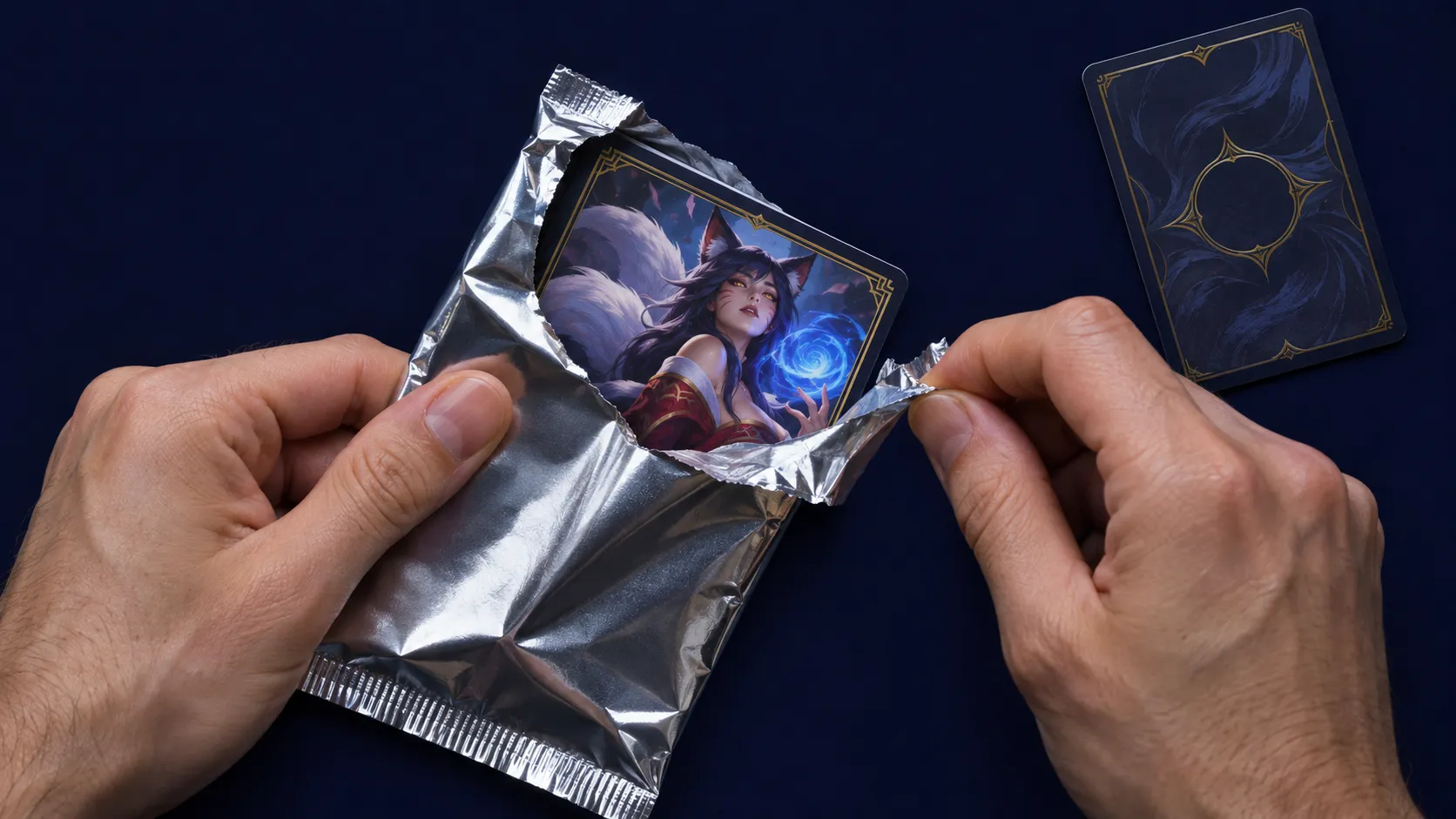
Choosing a Riftbound* booster box starts with deciding what you want from the opening. Some collectors focus on champions and artwork. Others want cards to play, while rare showcase treatments offer another reason to explore a set.
From Origins to Radiance, here’s how the releases compare, what the rarity labels mean and which details deserve a closer look before you buy.
What are the best Riftbound* cards to rip in 2026?
The best Riftbound* cards for your collection depend on whether you’re interested in a champion, a particular illustration or something you can play. Those interests can overlap, but a scarce treatment and a useful game card aren’t necessarily the same thing.
Signature cards and premium variants
Signature Overnumbers feature a foil signature from the card’s artist. They’re collectible treatments, rather than cards individually hand-signed by a League of Legends player or voice actor.
Overnumbers take their name from collector numbers that extend beyond a set’s standard numbering. That numbering doesn’t identify a fixed print run for the individual card.
Spiritforged expanded the selection with 30 Overnumbered cards, including 12 with Signature variants. If signatures are your focus, check the official card list for the specific set to see which cards have that treatment.
Champion cards and alternate artwork
A champion you’ve played for years can give a card more personal appeal than its rarity alone. Alternate artwork adds another way to collect that character, sometimes through a familiar League skin.
Origins introduced alternate-art Champion Units with different skin artwork and enhanced foil treatments. Later sets explore other themes, including Vendetta’s Crystal Rose cards and Radiance’s K/DA artwork.
Remember to read the full card name when comparing versions. Different cards can feature the same champion, while an alternate-art printing can share its game function with a standard version.
Rare collectible cards
Ultimate Rares give collectors another category to chase. Unleashed introduced the first: a special Overnumbered Baron Nashor. Riot describes it as appearing in fewer than 0.1% of the set’s packs.
Radiance adds a second Ultimate Rare, this time as a showcase Battlefield. Its published appearance rate is approximately 0.025% of packs across the print run. Neither figure promises a card in a particular box.
Scarcity can make a pull noteworthy, but it doesn’t establish its resale value. Collector demand and condition still matter.
Popular competitive cards
For players, an exciting pull might be a card that improves a deck rather than its appearance in a binder. New strategies and tournament results can change which cards players want.
Rules changes matter, too. Riot announced additions to the Standard and Constructed 2v2 ban lists on November 13, effective November 23, 2026. These include Riven, Broken Blade and Zhonya’s Hourglass. Check the rules applying to your format and event date before buying cards specifically for competition.
If you already have a deck list, compare buying the required individual cards with opening packs. A booster offers a surprise rather than a dependable way to complete a specific deck.
Which Riftbound* sets are worth opening in 2026?
The champion selection and artwork offer a useful starting point. The set’s game mechanics also matter if you plan to play with your pulls.
Riftbound* Origins
Origins is Riftbound’s* debut set, making it a natural place to explore the game’s original card selection. A Riftbound* Origins booster box, also called a booster display, contains 24 packs with 14 cards per pack.
Its appeal includes collecting the first release and exploring the champions and treatments that established the game. That history doesn’t mean every Origins card is scarce or that an early box will increase in value.
Before choosing a display, browse the official card list to see whether its characters and illustrations match what you enjoy collecting.
Riftbound* Spiritforged
Riftbound* Spiritforged adds champions including Ezreal, Irelia, Fiora and Ornn. Its Equipment mechanic lets players attach Gear to units, giving the release a distinct deck-building theme.
For collectors, its expanded Overnumber selection includes new treatments of champions that appeared in Origins, such as Ahri. Spiritforged’s English release arrived February 13, 2026.
If you’re collecting one champion across releases, this is a useful reminder to look beyond the set where that character first appeared.
Riftbound* Unleashed
Riftbound* Unleashed draws on the jungle and champions including Master Yi, Diana, Vi and Pyke. It introduces experience points (XP) alongside mechanics that reward gaining levels or playing units through Ambush.
Its collectible centerpiece is the Ultimate Rare Baron Nashor. The English release arrived May 8, 2026.
Choose your interest in the wider set before focusing on that exceptional pull. A rare card can be part of the appeal without becoming the only reason to open a box.
Riftbound* Vendetta and Radiance
Riftbound* Vendetta centers on rivalries, including Shen and Zed, and Mel and Ambessa. Its Rival Overnumbers use paired artwork designed to sit together, giving collectors a way to display those relationships. Crystal Rose alternate-art cards add another collecting theme. The English release arrived July 31, 2026.
Riftbound* Radiance, released October 23, 2026, takes a performance and music-inspired direction. K/DA Special alternate-art cards and Heartsteel Overnumbers give fans of League’s musical universe different treatments to explore.
Both sets offer clear visual themes. If you collect artwork rather than a complete set, compare the specific versions you like before deciding which packs to open.
What makes a Riftbound* card rare or valuable?
A card can attract interest because of its champion, artwork, scarcity or usefulness in a deck. Its condition and exact printing affect comparisons with other copies.
Factor | What to examine |
Card identity | Full name, set code and collector number |
Treatment | Standard printing, alternate art, Overnumber, Signature or Ultimate Rare |
Condition | Surface scratches, corners, edges and centering |
Language and edition | Whether comparable copies are the same product version |
Playing demand | Current deck use and legality in the relevant format |
Sales history | Completed sales for the same printing in similar condition |
An Overnumbered collector number isn’t a serial number showing that only a stated quantity exists. Likewise, a foil finish alone doesn’t establish rarity.
Use completed sales as a reference rather than relying on the highest advertised price. A scarce card still needs an interested buyer, and a card’s value can change as new products and strategies arrive.
Learn how to get started collecting Rips on OG.com
How do Riftbound* card rarities and pull rates work?
Riftbound’s* four core functional rarities are Common, Uncommon, Rare and Epic. The frame and the gem near the bottom of the card help identify them. Showcase treatments add another layer of collecting beyond those standard printings.
An Origins booster contains:
Slot | Number of cards |
Common | 7 |
Uncommon | 3 |
Rare or better | 2 |
Foil of any rarity | 1 |
Token or Rune | 1 |
For Origins, Riot describes Epics appearing in approximately one in four packs, alternate arts at roughly two per box and Overnumbers at roughly one per three boxes. These are distribution averages.
Later sets have their own details. Radiance, for example, separates a Rare-or-Epic slot from one that can contain showcase treatments or its Ultimate Rare. Check the information for the set you’re buying rather than applying Origins figures to every release.
Opening more packs gives you more cards to discover. It doesn’t make a particular champion or rare printing certain to appear.
Did you know you can rip multiple packs online at once? Find out how
Riftbound* booster boxes vs. individual packs: What’s the difference?
A booster box packages multiple randomized packs together. An individual pack offers a smaller opening with a lower total purchase cost, although its price per pack may differ.
Option | What it offers | What to check |
Sealed booster box | Multiple packs from a stated set | Pack count, language, seller and total price |
Individual booster pack | A smaller randomized opening | Set, packaging condition and price per pack |
Individual card | A specific collectible or deck component | Exact printing, authenticity and condition |
For a 24-pack display, divide the box price by 24 to compare its per-pack cost with individual packs. Keep in mind, though, that a lower per-pack figure doesn’t guarantee that the cards inside will cover what you paid.
Also distinguish booster displays from ready-to-play decks and accessory bundles. Their contents serve different purposes, even when they share a set name.
How to identify valuable Riftbound* cards
Start by identifying the exact printing. The champion’s name is only part of the answer, particularly when several cards and artwork treatments feature that character.
- Read the full name and set code. Establish which release the card belongs to.
- Check the collector number and treatment. Identify the printing rather than assuming an unusual number means a limited edition.
- Consult the official card gallery. This is the publisher’s visual card list, which helps you match artwork and versions.
- Inspect its condition. Look closely at the foil surface, corners and edges.
- Compare completed sales. Match the language, printing and condition as closely as possible.
Discover Riftbound* cards on OG.com
With OG.com Rips, you can reveal a physical Riftbound* collectible online, then choose delivery or take the cash buyback option.
Our paid Rips packs contain one card, which differs from a manufacturer’s multi-card booster pack. Review the possible contents, price and displayed pull chances for your chosen Rip.
You can explore Riftbound* Rips to see the current selection.
FAQs
What is Riftbound* TCG?
Riftbound* TCG means Riftbound* Trading Card Game, Riot Games’ physical card game set in the League of Legends universe. Players build decks and compete to control Battlefields, while collectors can explore champions, artwork and special printings.
Which Riftbound* set is best for collectors?
It depends on what you collect. Origins offers the debut set, Spiritforged expands the Overnumber selection, Unleashed introduces Ultimate Rare Baron Nashor, and Vendetta and Radiance explore rivalry and music themes. Compare the official card galleries for your favorite champions.
What are the rarest Riftbound* cards?
Ultimate Rares and Signature Overnumbers are among the scarce treatments covered here. Radiance’s Ultimate Rare has a published appearance rate of approximately 0.025% of packs. Rates apply to particular sets and don’t guarantee a pull.
How many packs are in a Riftbound* booster box?
It depends. An Origins booster display contains 24 packs, each with 14 cards.
What are Riftbound* Signature cards?
Signature Overnumbers carry a foil reproduction of the artist’s signature as part of their special treatment. They shouldn’t be confused with individually hand-signed cards or champion-associated Signature Spells.
Are Riftbound* cards valuable?
Some attract substantial collector or player interest, while many are widely available. The exact printing, condition, demand and current sales determine the value. Rarity alone doesn’t promise a particular price or future appreciation.
How do you play Riftbound*?
Players use runes to help pay for cards, deploy units and play spells while competing for control of Battlefields. Conquering and holding them scores points, with a standard two-player game played to eight points under the game’s scoring rules. A ready-to-play deck along with Riot’s quick-start guide provide an introduction.
OG.com Rips is offered by OGMUS, subject to Terms and Conditions; 18+ only. OG.com Rips is not regulated by the CFTC. Images shown do not represent a typical result. OGMUS also provides access to third-party services.
Third-party brand owners are not parties to card sales through OG.com Rips.