Soccer fans around the world: fan culture explained
Scottish fans may have returned home now, but they’ve left a lasting impression on the US cities they’ve visited.
Soccer
By Claire Williamson
With their humorous culture and traffic-cone obsession winding its way to the statues of Boston and Miami, they’re one visiting nation Americans won’t quickly forget.
Here’s a look at the Scottish soccer fans’ quirks, as well as other nations’ fan cultures at this year’s Soccer Championship 2026.
This article is for informational purposes only and should not be construed as financial or investment advice. Past performance does not guarantee future results.
Scottish fans make a strong impression
By now, you’ve probably heard of the Scottish soccer fans (also known as the Tartan Army) putting traffic cones on the heads of statues around the US cities they visited during the Soccer Championship 2026.
Photo: Only in Boston
This particular quirk started with a late-night prank in the 1980s in Glasgow, when revellers placed a traffic cone atop the head of the Duke of Wellington statue outside the Gallery of Modern Art in the city.
The city council removed it, and another cone promptly appeared again. And again. What began as a bit of mischief turned into a symbol of the citizens’ irreverent humor. Instead of fighting against it, the city eventually embraced the traffic cone as a cultural symbol.
The Tartan Army carried that heritage to the US, where they were widely embraced by the people and cities for their cheeky humor.
What is soccer fan culture?
Soccer, known as association football outside the US, is widely recognized as the world's most popular sport by total number of participants and followers.
Songs and chants – Chanting and singing are central to soccer fan culture. Many clubs and national teams have signature songs and chants that are passed down through generations of supporters.
Clothing, colors and flags – Wearing team colors, scarves and jerseys is one of the most visible and universal expressions of soccer fandom around the world. Scarves in particular serve as a symbol of team allegiance. Fans often hold them up when they sing their national anthem, during pre-match ceremonies or at key moments in a match.
Organized supporter groups – Sometimes called ultras, barras bravas or fan clubs depending on the country, these groups coordinate chants, visual displays known as tifos and collective travel to away matches. Tifos – large-scale choreographed visual displays – are a prominent feature of soccer fan culture, particularly in European and South American leagues. These displays can take over entire stadium sections.
Pre-match gatherings – Pubs, plazas and designated fan zones are common meeting points for soccer supporters around the world, serving as places to build an atmosphere before kickoff.
Travel and supporter groups – Traveling to support a national team at away matches or major tournaments is a defining feature of dedicated soccer fandom. Some supporter groups organize charter flights, group accommodations and coordinated travel plans.
Reactions to wins, losses, and controversial moments – Celebrations of victory often lead to massive, synchronized street parties, civic holidays and coordinated community gatherings. Defeats can result in shared collective mourning or intense national debates regarding strategy and management. Controversial referee decisions may dominate public discourse, media coverage and sports talk radio for weeks following a tournament's conclusion.
How fan culture changes from country to country
The Soccer Championship 2026 has featured 48 teams, up from 32 in previous competitions. That means more countries, more traditions and more soccer fans converging in the US, Mexico and Canada. Here's a rundown of some of the most well-known fan cultures.
Brazil soccer fan culture
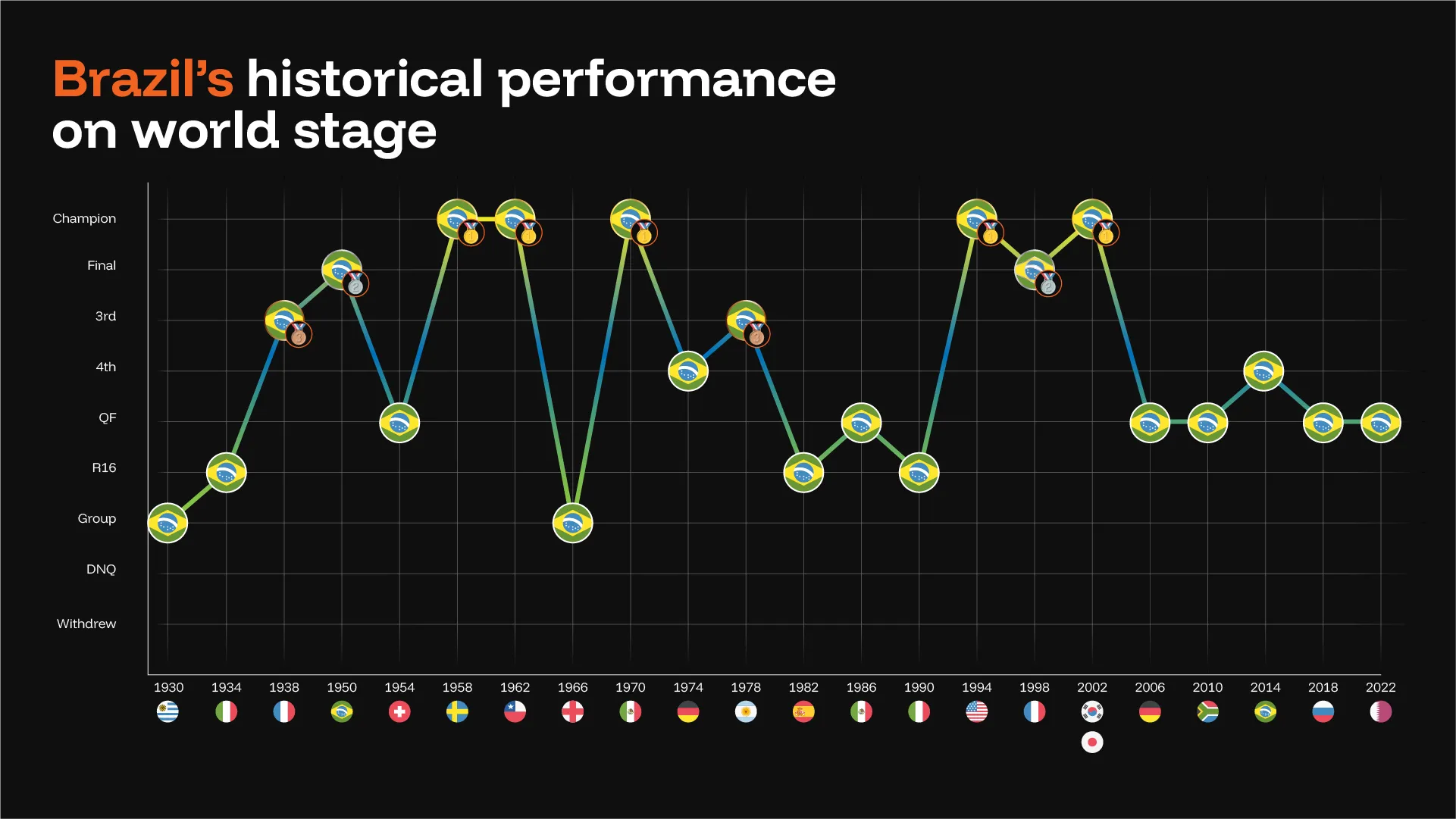
Brazil has won the Soccer Championship a record five times: in 1958, 1962, 1970, 1994 and 2002. That success is often associated with one of the sport's most expressive fan cultures.
Brazilian soccer fan culture is widely characterized by samba drumming, dancing and elaborate displays of the national yellow and green colors in stadiums.
Mexico soccer fan culture
Mexico's national team has one of the largest and most passionate traveling fan bases in the North, Central America and Caribbean regions, regularly filling stadiums for away matches, particularly in the US.
Mexico soccer fans are well-known for creating lively match-day atmospheres, including widespread displays of the national green, white and red colors and coordinated chanting throughout games.
The "Mexican wave" – known as "la ola" in Spanish – is a stadium phenomenon that became globally associated with the Soccer Championship 1986 held in Mexico, though its exact origin is debated.
Argentina soccer fan culture
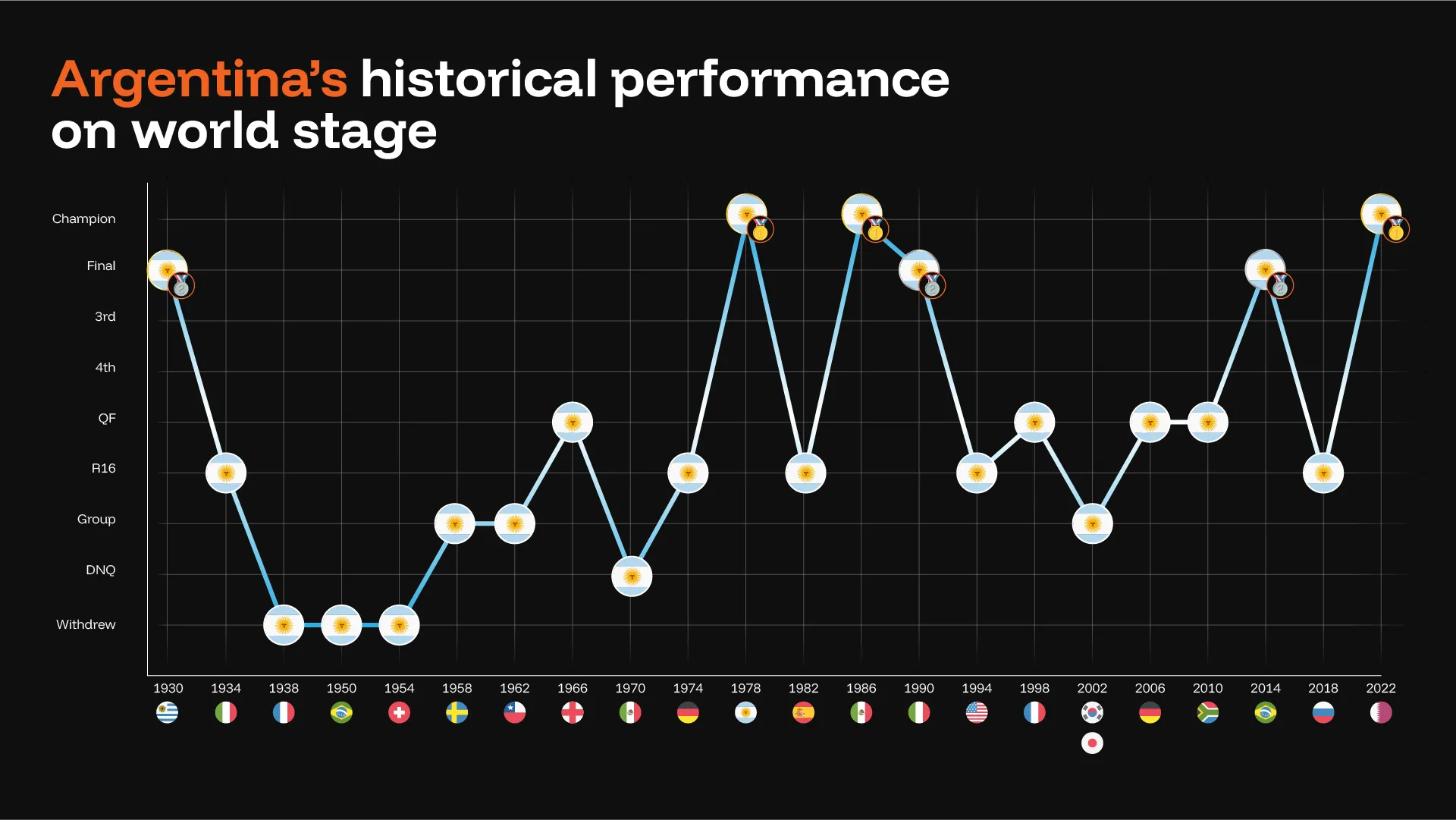
Argentina has been the Soccer Championship victor three times: in 1978, 1986 and 2022. Argentina soccer fans are known for their passionate supporter groups called barras bravas, which lead chanting, coordinate displays and create infectious atmospheres in stadiums.
Following Argentina's Soccer Championship 2022 victory, celebrations in Buenos Aires drew millions of people into the streets, with estimates of around 4 million participants. Few other fan cultures can match that scale of collective celebration.
Dutch soccer fan culture
Another nation that’s made a lasting impression during this Soccer Championship is the Netherlands. Dutch supporters partake in a tradition known as Oranjegekte, where they dress in bright orange clothing and follow a procession to the stadium before their team’s game. These walks are typically led by DJs, loud music and the famous double-decker bus, Oranjebus.
Fans also engage in a movement where they jump to the left and right in unison, chanting, “Links, rechts” (left, right), as well as singing new and old songs created specifically for the Soccer Championship.
Fan atmosphere and the tournament experience
Fan engagement extends well beyond cheering in the stands. The organizer reported that over 5 billion people engaged with the Soccer Championship 2022 in Qatar across all platforms, generating over 93 billion engagements across social media platforms during the tournament.
One option for fans to engage is prediction markets, which allow participants to trade on their views of real-world events.
How to trade soccer prediction markets on OG.com
Prediction markets let participants trade event contracts based on the outcomes of real-world events. Here's how to get started on OG.com.
Create an account: Open an account and complete sign-up, including identity verification. You can use our web or mobile platforms.
Browse soccer markets: Explore event contracts for the upcoming soccer matches.
Review and trade: Compare the market price with your own view. Check the rules, fees and settlement details before opening a position.
Monitor your position: After trading, your contract appears in your open positions, where you can track price movement as new information comes in.
Estimates place the number of soccer fans worldwide at more than 4 billion people, making soccer the most followed sport in the world. The term "soccer fan" encompasses a wide spectrum, from casual viewers who tune in only for the Soccer Championship to dedicated supporters who attend every match, travel internationally and belong to organized fan groups.
What are soccer fans called?
It varies by country and culture. Common terms include supporters, tifosi in Italy, hinchada in Argentina, torcida in Brazil and the 12th man – a term reflecting the idea of fans as an additional player on the field.
Why do soccer fans wear scarves?
Soccer scarves serve as both a symbol of team allegiance and a practical accessory. Fans often hold scarves aloft during anthem singing, pre-match ceremonies or key moments in a match as a collective display of support.
Which soccer teams engage fans the most?
Fan engagement varies widely and depends on factors like history, tournament success and cultural traditions. Countries such as Brazil, Argentina, Mexico and Scotland are all recognized for distinctive and passionate supporter cultures.
What country has the most soccer fans?
There is no single authoritative ranking, as the answer depends on how fandom is measured. Countries with large populations and deep soccer traditions tend to have the highest numbers of followers.
How many soccer fans are in the US?
Exact figures vary depending on the survey and how "fan" is defined. One thing is for sure – soccer's popularity in the US has been growing, particularly ahead of the Soccer Championship 2026.
Important information: Prediction is an event contract that is a derivatives product offered by North American Derivatives Exchange, Inc. (NADEX), a CFTC-regulated exchange, which does business under the brand OG.com Prediction Markets (OG) Crypto.com | Derivatives North America and uses a CFTC-regulated exchange that uses OG.com technology.
Trading on OG.com involves risk and may not be appropriate for all. By trading you risk losing your cost to enter any transaction, including fees. You should carefully consider whether trading on OG.com is appropriate for you in light of your investment experience and financial resources. Any trading decisions you make are solely your responsibility and at your own risk.